
Sietse Hagen
In 2018, I started my undergraduate studies on English language and culture in the Netherlands, where I am from. I came for linguistics, and I wanted to become a secondary-school teacher, but I ended up falling in love with literary criticism. I quickly encountered postcolonialism and became intrigued with postcolonial literature. In my third year, I got a scholarship to spend a year abroad at Newcastle University (which ended up being online from my Dutch bedroom due to Covid, boo!) where I tried to attend as many postcolonial modules as possible. Most of these were either about India specifically or dealt with Indian literature extensively while covering more postcolonial contexts. Even back in the Netherlands, most postcolonial literature modules dealt with Indian literature. And so, my research quite naturally became shaped around Indian literature.
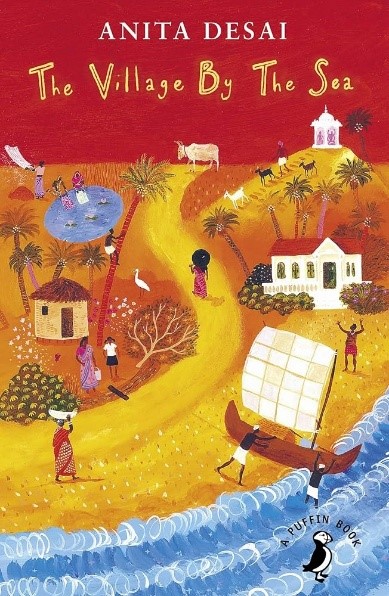
This faux year abroad did another thing for me: it introduced me to children’s literature. There was a module at Newcastle University at the time taught by Prof. Karen Sands-O’Connor centred around Black British children’s literature. While not postcolonial, per se, this awakened the idea for me to combine postcolonialism from an Indian context and children’s literature. I wrote my Bachelor’s thesis on Indian children’s literature, adopting a postcolonial lens. The thesis was shaped around Rabindranath Tagore’s The Crescent Moon and Anita Desai’s The Village by the Sea, while critiquing Rudyard Kipling’s children’s literature, specifically The Jungle Book.
I enjoyed research so much that I decided to do a Research Master (ReMa) which would guide me towards a life in academia more than my original plan to become a teacher. During my ReMa, I decided to take my research a step further. Perhaps my greatest hobby outside of my work and studies is everything horror. Not only watching horror movies and reading horror books, but also collecting items related to horror and playing horror-themed games (though I sometimes get too scared to finish them). What would it look like to apply horror to my ideas around postcolonial children’s literature? The answer to this brought me to trauma theory.
What I found when combining these separate research focuses was that trauma emerged as a central theme. Horror itself is a genre of trauma while postcolonialism is filled with discussions of trauma. However, while trauma is often passed on to children when discussing intergenerational forms of trauma, often relevant to postcolonial studies, discussions around trauma in children’s literature were somewhat rare. There are many scholars working on this topic, but how many authors are writing about trauma in their children’s books? How far can authors even go with discussing traumatic subjects with young readers? I was enamoured by these questions, and I became ever more motivated to work on this topic.
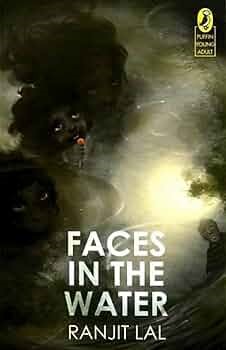
While I had been working on postcolonial studies throughout my Master’s, the idea occurred to me to apply this framework to a similar though somewhat removed research topic: Indigenous studies. My Master’s thesis, in the end, became a discussion around horror and trauma in children’s books written by Indigenous authors from the USA and Canada. At the same time, I was still working on the Indian context and published my first article in a big journal: Bookbird. This was a short article about depictions of female infanticide in Ranjit Lal’s Faces in the Water. This was the moment for me that I realised various things. First of all, I realised that this was something I wanted to keep working on: horror and trauma in children’s literature. Secondly, I realised that I could do this: I got published, so surely I can do research. Finally, I realised that this was necessary.
Throughout my research, I found out that this particular combination of research topics, horror, postcolonialism, trauma theory and children’s literature, was underrepresented. In an English context, this combination of themes was underrepresented when discussing Indian children’s literature. I decided then that I wanted to do my PhD in the UK and research how horror and trauma are represented in Indian children’s literature and how they intertwine. I chose the UK because I wanted to add a diasporic dimension to it and play with the idea of representation: to highlight the importance of representing horrifying and traumatic realities to young readers, whether they identify as Indian or not. After my Master’s, I spent a year attending conferences and writing papers, while spending a lot of time working on research proposals. In the end, I got a funded PhD position at the University of Liverpool where I am now in my first year of conducting research on this fascinating topic.
“Horror and trauma in contemporary Indian children’s literature.”
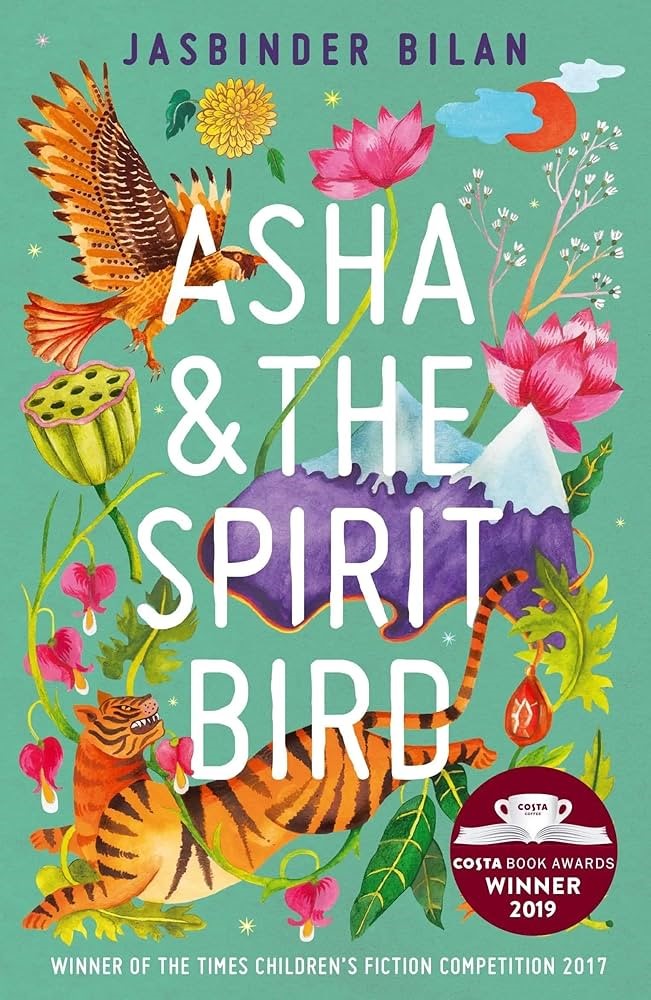
My corpus includes both diasporic and non-diasporic children’s books. Authors featured in my PhD are Jasbinder Bilan, Bali Rai, Jamila Gavin, Salman Rushdie, Anita Desai and Ranjit Lal. Jasbinder Bilan’s work, specifically, has really brought me to this specific topic, especially her first book Asha & the Spirit Bird. This is perhaps the book that made me decide on my research proposal for this PhD, and it’s the book that introduced the idea of introducing diasporic elements to my research to me.
I have chosen to only work with books originally written in English. This adds a level of colonial haunting to the texts as the colonial language has to be used to connect all Indian children and to allow these authors to share traumas that are shared between all Indian people. Sadly, to make it more inclusive, the language of the coloniser has to be used. Another reason for choosing English is perhaps the elephant in the room: I’m not Indian. I only speak Dutch, English, a bit of Japanese and I can quite confidently, though not at all fluently, go through everyday life using German and French. I don’t speak any of the many languages spoken on the Indian subcontinent. English is my only option.
I don’t want to work with translated books. I don’t think it’s my place to discuss books originally written in a language that I don’t understand. Translations, to me, are official interpretations of books, but not the original. What I hope to do with my research is to inspire others working in the Indian context of children’s literature, to pick up this topic and apply it to children’s books written in these languages that I don’t speak. Through my PhD project, I want to show the importance of discussing horror and trauma in Indian children’s literature, but that doesn’t mean that everything should be translated into a language introduced to India by their coloniser. I am doing what I can do and what I think is important to do, and I hope, in the future, that other researchers will see the significance of my work and apply it to contexts about which I cannot speak.
My philosophy is that children have a right to knowledge. They have a right to know what is part of their cultural heritage, however traumatic this might be. If written right, children’s literature authors can make a real change. They have the power to introduce children to horrific realities and terrifying histories while not retraumatising these child readers. This is really what my research focusses on. How can this be done and why is it important? The answers are there; it’s just a matter of putting everything together in a way that makes sense.
The first thing I did in my PhD project was research ghosts. Ghosts are mirrors as they are windows. They connect readers to a past while presenting it to them in the present. They have the ability to transport child readers to a different time: a time of horrors and traumas. Yet, they have the power to stay distanced, to observe but not to touch. They are the perfect horrors to help children be introduced to horror and trauma.
I am currently focusing on memory specifically. While the ghost can implant memories and make cultural and communal memories individual, I still need to know what exactly memories are and how they function. That is what I’m currently researching. Of course, this includes trauma. Memory and trauma are omnipresent throughout my research, so a solid understanding of these terms will be central.
After memory, I will dive into horror. While this is something that I’ve been working on for a few years now, horror remains difficult to define. Moreover, most research done on relevant areas of horror around my topic are written from a Gothic perspective. This makes me uncomfortable. The Gothic genre was introduced by the English and it is, at least to me, an imperial genre. To call Indian children’s horror Gothic seems quite problematic to me. I still have to do more research around these claims, but I believe the term Gothic to be outdated. Of course, there will be Gothic influences in these texts, but isn’t it troubling to then call them Gothic texts? Just because ghosts were part of the Gothic tradition doesn’t mean that the precolonial Indian ghost has been exorcised.
About the Author

Sietse Hagen is a PhD student at the University of Liverpool, UK where he specialises in horror and trauma in children’s literature, with his research project focusing on postcolonial, contemporary Indian children’s books. He is from a small town in the Netherlands where he collected too many books. Now, in Liverpool, he has bought more books. He got his Bachelor’s and Master’s degrees from the University of Groningen, and he has attended various international conferences and has had his research published multiple times. He is currently working on a small project on ghost hunters while still working on his memory chapter of his PhD project.
