
Jyoti Kushwaha
Weekends today may be a time for leisure, but for someone like me—born in the late seventies and constantly balancing tradition and modernity—Sundays were never about rest. They were about dusting, cleaning, and occasionally stumbling upon forgotten treasures.
One such Sunday, while rummaging through the storeroom, I tripped over an old trunk. As pain shot through my leg, I cursed under my breath—until I saw what had caused my fall. Inside the trunk lay a forgotten world: stacks of colourful comics, their pages slightly yellowed but still vibrant. My pain was instantly forgotten. Chacha Chaudhary, Pinki, Billoo, Raman, and Channi Chachi smiled back at me, their voices echoing in my mind.
Chacha Chaudhary ka dimaag computer se bhi tez chalta hai!
[Chacha Chaudhary’s brain works faster than a computer!]
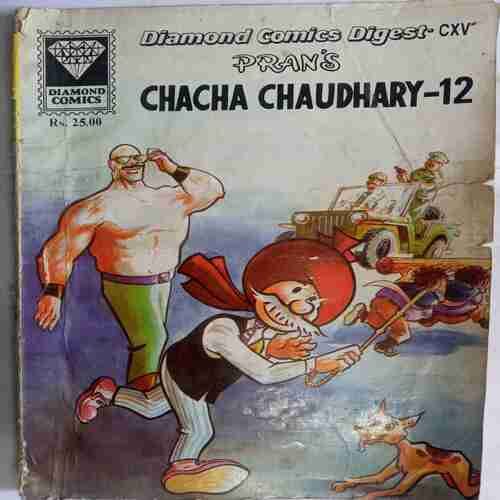
Sabu ko jab gussa aata hai, toh kahin jwalamukhi phat-ta hai!
[When Sabu gets angry, a volcano erupts somewhere!]
As I huddled in the corner of the storeroom, flipping through the pages, I was no longer an adult. I was an eight-year-old again, lost in the fantastic world of Indian comics.
Unlike the Western superheroes who battled aliens or saved the world in capes, Chacha Chaudhary and his towering companion, Sabu, existed in an India I recognised. They navigated dusty streets, dealt with cunning thieves, and outwitted bullies with street-smart wisdom. But even within this familiar world, they were larger than life—Chacha’s intelligence was near-magical, and Sabu’s strength could shake mountains. It was a fantasy rooted in the everyday, where intelligence was as powerful as muscle, and mischief was met with wit.
The larger-than-life storytelling fascinated me. Sabu was from Jupiter! Just the idea of an alien living in an Indian household, eating parathas and protecting a frail old man, was thrilling. It was my first introduction to the limitless possibilities of storytelling—the idea that imagination could bend reality while still feeling real.
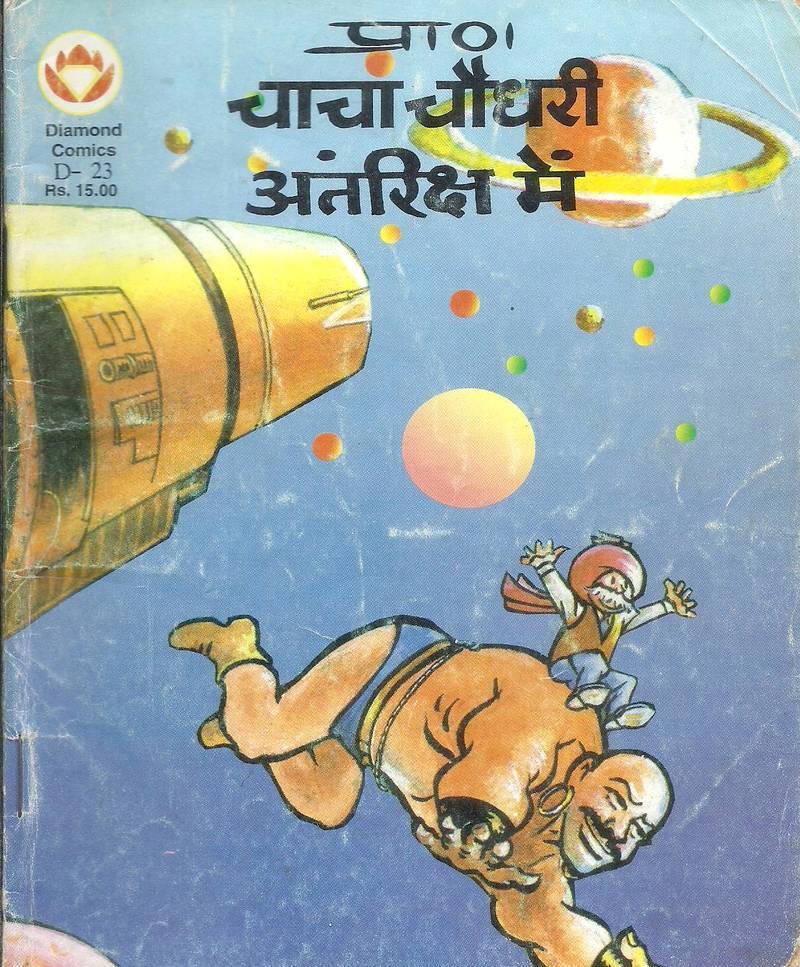
That fantastical world did more than just spark my imagination—it made me eager to read, to follow the extraordinary adventures of its characters, and, unbeknownst to me, to learn. Looking back, I realise that beyond the thrill of fantasy, comics played an unexpected role. They could not simply be discarded as lowbrow entertainment, as many tend to do; they offered an engaging alternative to dull textbooks that made learning feel like a chore.
Comics, in fact, can play a significant role in language acquisition. It may not be necessary to elaborate on how, in middle-class Indian homes like ours, English was an aspirational language. My household was no exception. My parents, like many others, wanted me to be fluent in the language, to speak it effortlessly. But textbooks grammar not only made me sleepy, but also turned learning into a dry, theoretical exercise without any real-world application. That’s where multimodal texts like comics can offer a different perspective. And that’s exactly what my maternal uncle, an English teacher, recognised—he handed me comics.
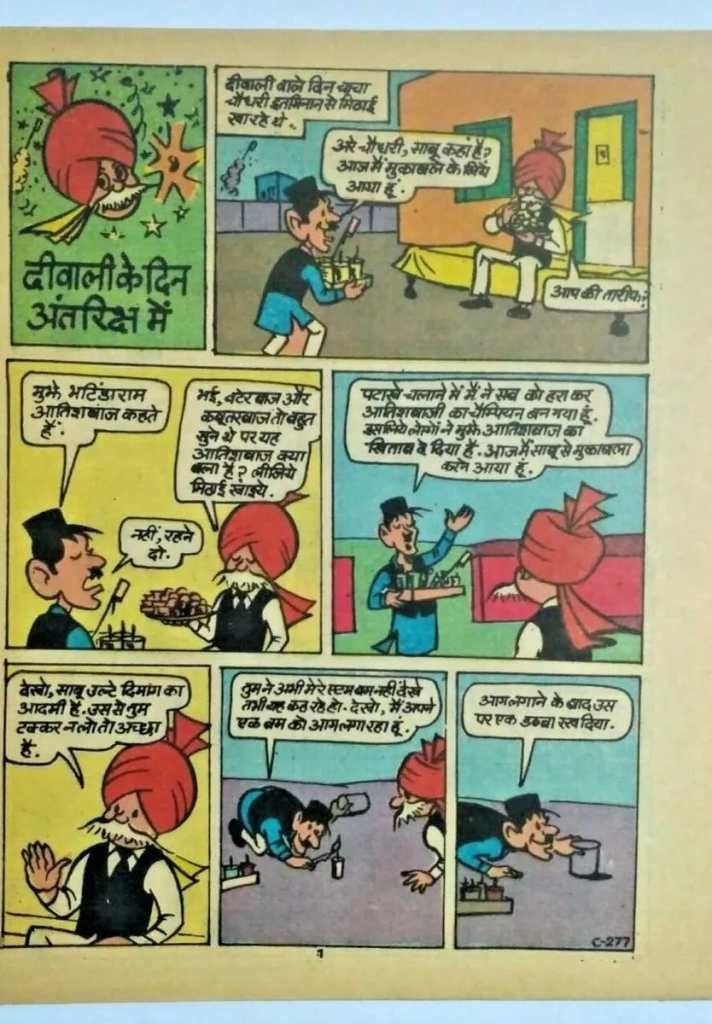
At first, I read them in Hindi. But curiosity led me to their English versions. The simple dialogues, often paired with expressive visuals, made learning effortless. Comics taught me sentence structures, idioms, and even the names of everyday objects that my schoolbooks ignored. (Did you know “jalebi” was called a funnel cake? I didn’t—until comics told me!)
Linguist Stephen Krashen argues that language acquisition happens best when we engage with meaningful, enjoyable content. My experience proved him right. Comics didn’t lecture me on grammar; they showed me language in action. They made English feel alive.
That day, as I sat there lost in nostalgia, a new kind of pain surfaced. The world of Chacha Chaudhary and Sabu seems to have been replaced. Today’s children don’t read comics; they watch cartoons, play video games, and swipe through mobile screens. Technology has crept into every corner of childhood, replacing the joy of holding a comic book in one’s hands.
I picked up the entire stack from the trunk and carried it to the living room. As a teacher, I knew what I had to do. I would tell my students about these comics. I would encourage them to read, to discover the magic of a world where intelligence was faster than a computer and anger could make volcanoes erupt.
Because a child who reads today grows into an adult who dreams. And dreams, after all, are where fantasy begins!

Jyoti Kushwaha is presently working as an Assistant Professor in Baikunthi Devi Kanya Mahavidyalaya, Agra affiliated to Dr. Bhimrao Ambedkar University, Agra. Her research interest lies in Children’s Literature and she aspires to be a part of the world of fascinating authors of Children’s Literature. Email address: kushwahajyoti788@gmail.
