

Tina Jose
When I was six, the third baby in our family was born. Although it was a happy occasion, certain birth-related issues meant that he required extra care for most of his life. This also meant that I was soon left to my own devices. It was the 80s in the UAE, a strange land far from what my parents had known, where life as immigrants brought its own struggles and money was often scarce. Also, back then, there was not much in the way of technology like today and hence imagination was crucial for children. It led us to create fantasy worlds that offered an escape and turned ordinary moments into adventures, providing comfort and hope in an unpredictable world. It was around this time, one Christmas, that my parents gifted me the first of my Barbie dolls. That was the beginning of my fascination with all things Barbie—her music, books, and CDs—as I stepped into her fantasy world, just as she became part of mine.
I loved everything to do with Barbie well into my teenage years. But could you blame me? Barbie always had a smile, a great life, wonderful friends and family, and marvellous adventures with happy endings—everything a child could ever want. At that time, she could be found at almost every little girl’s bedside. To me Barbie was the coolest: she had the softest hair, the trendiest clothes, the best friends, and absolutely delightful adventures. These were all things I struggled with as a shy, obese, awkward teenager, and in Barbie, I found the confidence and escape I lacked. Barbie was the perfect solace for a rootless, struggling teenager. She provided hopes and dreams where there could be none. She allowed us to be creative by dressing her up in odds and ends. She taught us then what modern-day motivational figures like Dhar Mann, known for his videos on personal growth and perseverance, teach today: you can achieve what you believe!

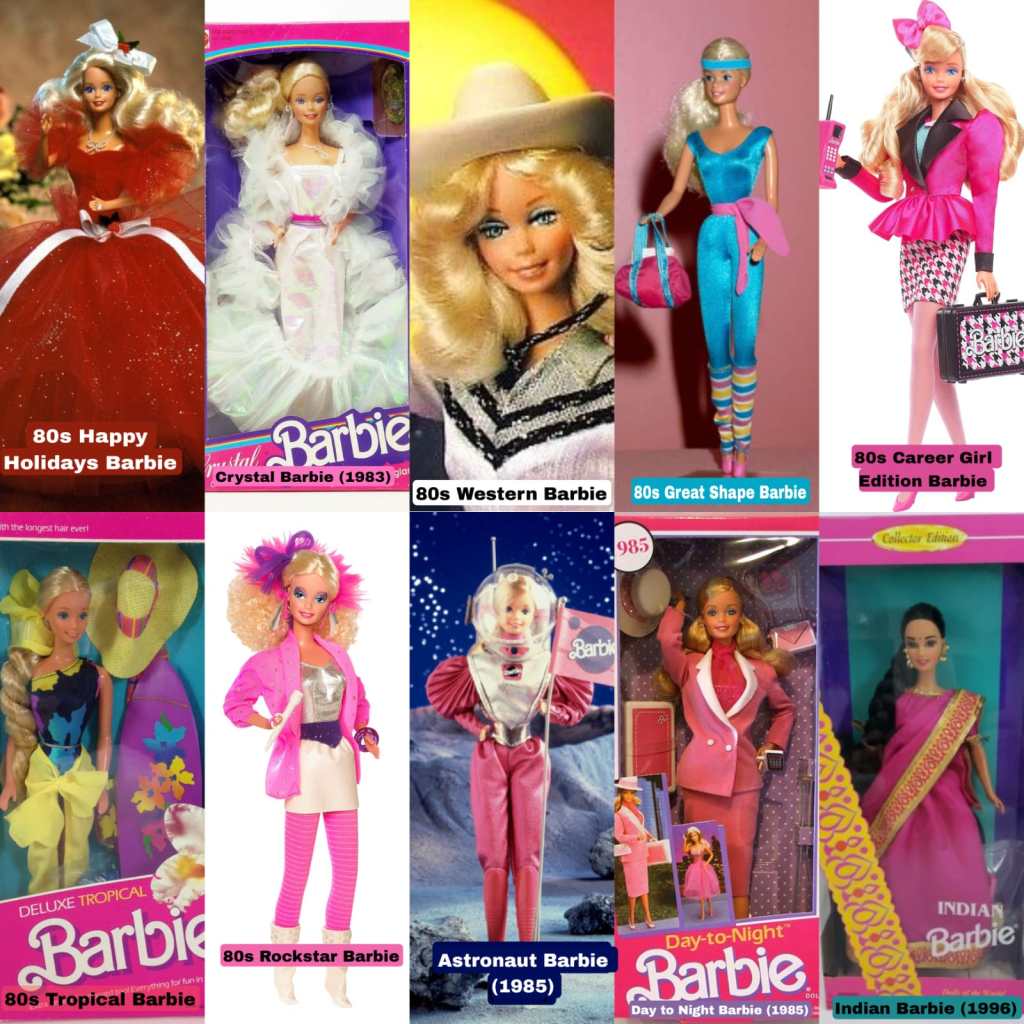
I found myself captivated by Barbie in all her forms, collecting anything and everything related to her. When any literature came about Barbie in the newspaper or the children’s magazines, I would carefully tear out the pages and have my mother file it in a special file. I believe this file is still somewhere there at my parents’ home for I could never let go of it. Barbie stickers were another obsession, specially because they were rare and hard to come by. There were sticker books but being on the slightly expensive side I rarely bought them. But I do believe we were obsessed as pre-teens in the UAE with this book where you had to buy sticker packets separately to fill the pages, one sticker at a time. We heard that the filled book could be exchanged for a Barbie doll! I doubt anyone got a doll, but finishing the sticker story book became our dream. All the oohs and aahs and comparing how far we had completed the book became a regular activity for us.
Barbie became more than just a toy for me; she was an emblem of possibility. In the Barbie movie, she tells us: “Basically, everything that men do in your world, women do in ours.” Barbie was our inspiration to become an astronaut, a doctor, a teacher and even the President. If she could make anything her career, why couldn’t we? I wonder if there is any career Barbie hasn’t embraced, from her introduction to the world in 1959.

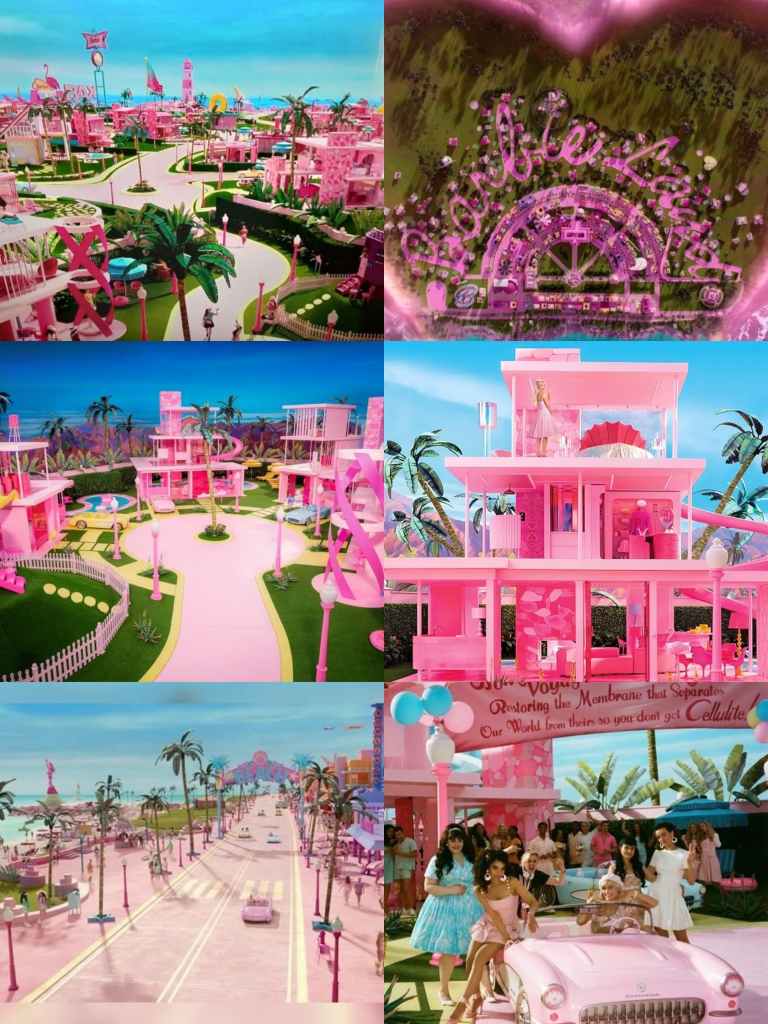
As an adult, my love for her hasn’t yet weaned. It has rather grown as I have bloomed into a collector, opting for rare Barbie dolls today. Every doll I played with and every single page of her books that I turned helped me in my future career path as a writer and teacher. Were it not for Barbie I wonder where I would have found the courage and the inspiration to overcome the challenges I faced and grow up into a strong woman. I believe there are many adults out there who silently thank Barbie and remember the happy times as they continue progressing forward. As I reflect on my relationship with Barbie today, I realise that she taught me the transformative power of fantasy. Her world enabled me to transcend the limitations of reality and imagine a future filled with limitless potential.
About the Author

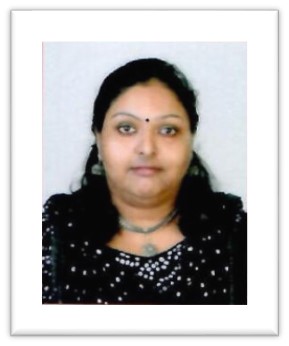
Tina Jose currently works as an Assistant Professor at St. Stephen’s College, Kottayam (Kerala, India). She is also pursuing her doctoral degree at the School of Letters, Mahatma Gandhi University, Kottayam. When not busy teaching or researching, she likes to spend her time pursuing her triple passions: photography, writing and travelling. She has two books to her credit: an anthology entitled Docile No More and a travelogue entitled Wandering Woman, both available on Amazon, as well as several academic publications in reputed journals around the globe.