

Shreya Prasad
Childhood is a magical time filled with stories of fairies, goblins, quests and adventure. Perhaps it is because the fantastic reach of magic helps a child comprehend the unfamiliar. But mostly, it is because fantasy is fun. It is the power to see the world not as it is but as it can be, as you want it to be. Though why my classmates (and I am positive yours too) wanted our school to be built on a graveyard will always be a mystery to me. Sanju’s magical pencil from Shaka Laka Boom Boom (2000 – 2004), the fantasy land of Son Pari and Altu in Son Pari (2000 – 2004), Jiya’s spells in Shararat (2003 – 2006), Raven’s psychic abilities in That’s So Raven (2003 – 2007) and the fantastical adventures of the Russos in The Wizards of Waverly Place (2007 – 2012) imbued my childhood with adventure and mystery. As a 1990s kid reaping the benefits of recent economic reforms that opened the Indian broadcasting scene, I grew up believing magic was just around the corner, waiting, and if I just looked hard enough, I could reach out and grab it! I aggressively waited for my Hogwarts letter till the age of thirteen, hoping it worked differently in India. Though these early influences seem a simple matter of east meets west, looking closely at them through the lens of a young researcher currently working on Indian fantasy written in English, they reveal interesting parallels and contradictions that call me to take stock of my own assumptions and biases. There went my dream of this article being an easy walk across the Shire!


The concept of Pari, or fairy, explored in both Son Pari and Shararat has Persian roots. Moreover, countless stories narrated by my grandfather on breezy summer evenings about princes, princesses, generals and courtiers concerning plots, betrayals and “ashrafis” had Persian influence too. Devki Nandan Khatri’s fantastic masterpiece, Chandrakanta, one of the first novels in Hindi, based its worldbuilding on dastangoi romances. But these were not the only exposure I had to fantasy. The stories of Amar Chitra Katha, in both Hindi and English based on mythology, legends and history offered me a window into the rich heritage of Hindu (upper caste) myths and legends as a child. Myths about the origin of the universe and stories of various gods and their avatars were my favorite as a child.
In middle school I mostly read Enid Blyton, abridged classics like Victorian novels, Shakespearean plays and books that my parents deemed “appropriate” for a child. Growing up in Renukoot, a small industrial town in Uttar Pradesh, India, with no book stores that had fiction on the shelf, I was dependent on what my parents bought for me. The Scholastic pamphlets distributed in our schools offered some choice. At least I got to select what I read from a list of age appropriate books. High school brought with itself more agency. Friends who visited cities often (and bookstores too) were kind enough to lend their trendy books to others. This is how I first got my hands on Stephenie Meyer’s Twilight. I was so hooked that I hounded my father till he brought the whole set for me from Lucknow on one of his official trips. But it wasn’t just the fantastic that was fantastical. While Frodo’s long journey from Shire to Mount Doom and the Pevensie children’s various adventures in Narnia happened in places far away and inaccessible, even the mundane world of The Famous Five and The Secret Seven felt fantastic. Teenagers without supervision, free to pursue their own adventures seemed like a dream. Their worlds which had bicycles with dynamo headlights, bread with marmalade, sardines, and strawberries with cream were exotic and inaccessible; they were fantastic. As I grew up, moved to Lucknow and then eventually to the metropolitan city of Delhi, the fantastically unfamiliar slowly but surely became familiar, even mundane. The discovery that marmalade is just jam with bits of rind or pulp, like Kissan’s Orange Jam that I hated as a kid, and that strawberries taste nothing like strawberry ice cream, have not helped in releasing the hold fantasy has on me.

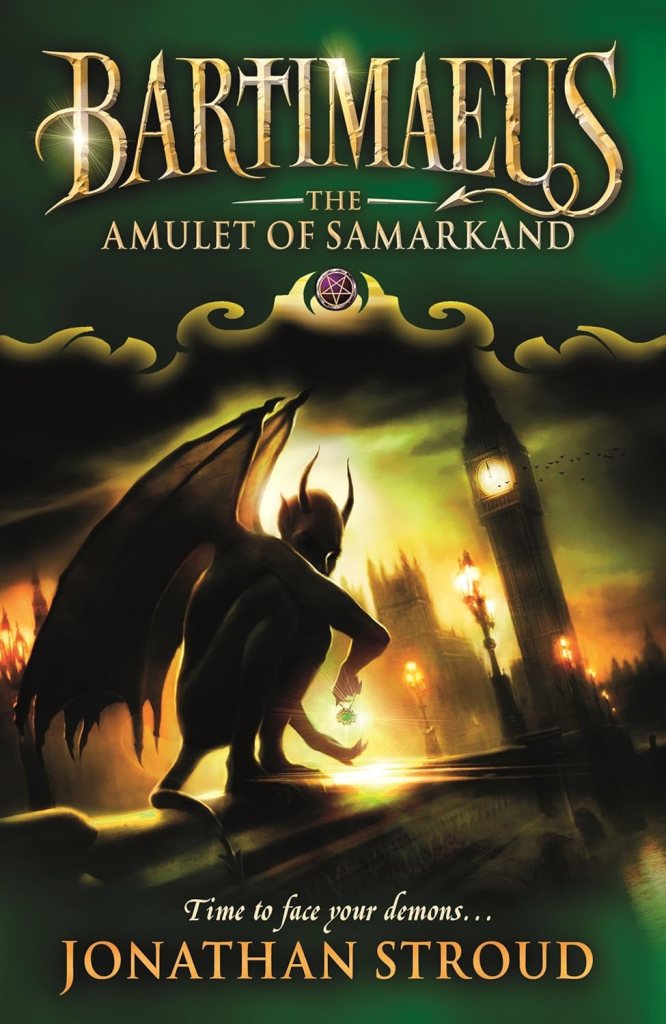
In 2010, my brother moved to Hyderabad for his bachelor’s degree. This meant that every semester break when he came back, he would bring novels he had read or his friends recommended for me. He brought home ‘literary’ books like The Alchemist (1988) by Paulo Coelho and The Kite Runner (2003) by Khaled Hosseini. Though my young mind of 14 years felt quite self important reading these books, my brother also brought fantasy novels that I thoroughly enjoyed. This meant The Chronicles of Narnia, The Lord of the Rings, The Bartimaeus Sequence, The Inheritance Cycle and many more. My rising interest in fantasy and my search for something more familiar, led me to The Immortals of Meluha (2010) by Amish Tripathi for the first time. I had loved the fantastic tales of Amar Chitra Katha about legends and myths, but reading Meluha felt like Indian fantasy for the first time. While the protagonist and his life arc were largely mythical (corresponding to the life of god Shiva), the setting of Indus Valley Civilization, and the conventions followed in the book were definitely fantasy: a tribal hero prophesied to save the world who must overcome both internal and external battles to save the world. Tripathi’s commercial success intensified the wave of mythological novels which was already gaining momentum from the 2000s with writers like Ashok Banker, Devdutt Pattnaik, and Ramesh Menon writing modern rendering of ancient Hindu myths and legends.
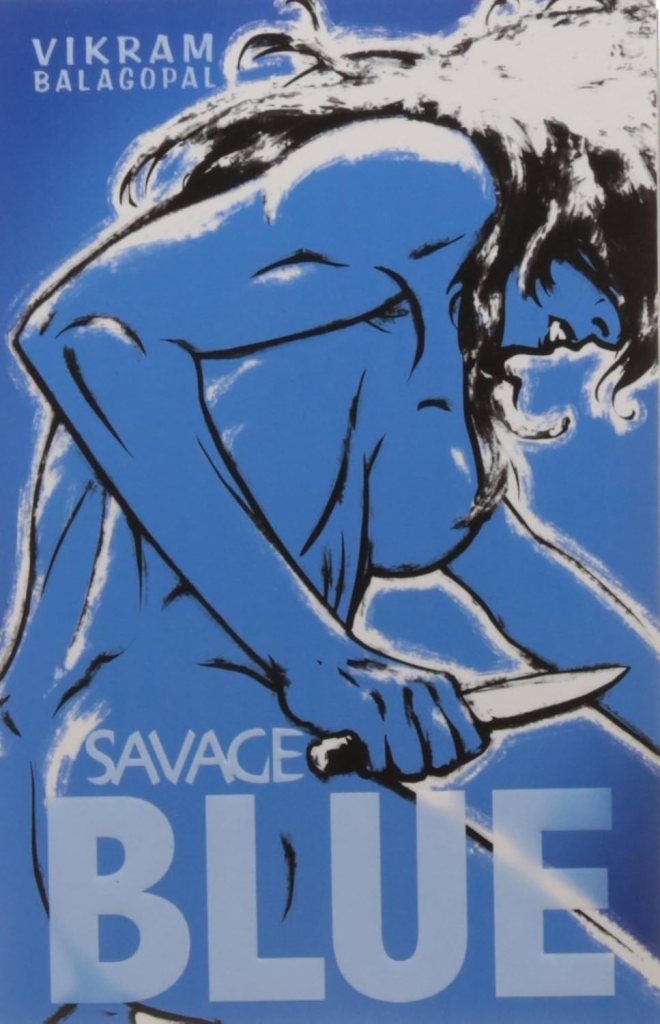
This mythical trend is going strong even today (take a look at blockbuster movies like Baahubali, Brahmastra and Kalki) though there has been a consistent rise of experimentation with the mythic form of Tripathi. Fantasies by Samit Basu, Payal Dhar, Vandana Singh and other contemporary fantasy writers do not abandon myth, rather they use myths and legends as a source in their worldbuilding, mixing Indian traditions with western fantasy conventions to tell innovative fantasy stories. Basu’s GameWorld series is a delightful mixing of eastern and western fantasy. Both Singh and Dhar play with science fiction and mystic elements in their storytelling. The experimental worldbuilding and original stories of writers like Tashan Mehta, Vikram Balgopal and Gourav Mohanty have created a space for Indian fantasy not only in India but also, internationally among both young adults and adults.

My research investigates the spaces opened up by Indian fantasy written in English. While thinking about this article, my instinct was to assume that fantasy in children’s literature (which would include young adults) works differently than fantasy for adults. The more I thought about the boundaries of children’s literature and the role of fantasy in the literature I grew up reading, I realized my instincts were rooted in bias. A bias arising from the circumstances surrounding the evolution of the scholarship of fantasy.
It would not be presumptuous to claim that fantasy is rarely taken seriously by readers of “the great literary canon”. These readers often dismiss fantasy to the realm of children’s literature even when they were not written explicitly for kids. George MacDonald in his works often assumes an adult audience and Charles Kingsley’s The Water-babies (1863) was originally written for adults (Levy and Mendlesohn 37) . Much of the folktales, fairy tales and adventures that we associate with children’s literature were not originally written for them but for the 18th century salons of France (Zipes), though they read and enjoyed them thoroughly. The shift of tales with fantastic elements to the sole readership of children (and women) came in the 19th century with the rise of the realist novel (as discussed in Reynolds ch. 1, Levy and Mendlesohn 33). Realism was for adults and the strong of mind, while fantasy with its escapist nature was for children and immature adults. Thus, literature once appropriate for children became exclusively children’s literature.
By this time fantasy stories started being written for children. Thus, they were often didactic, instructional and formulaic where fantasy was the “spoonful of sugar” that made the “medicine” of social conduct and morality go down children’s throats. In the post-enlightenment age that was rapidly moving towards industrialisation, fantasy as a mode of storytelling was no longer fashionable and was banished to the corner of children’s literature. Therefore, early scholarship on fantasy (Colin Manlove, Tzvetan Todorov, Rosemary Jackson and W. R. Irwin) vehemently defended the value of fantasy to the field of literature. It is no surprise that early scholars, perhaps accidentally, perhaps intentionally, distanced themselves from children’s literature even though they referred to them throughout their works. Manlove may talk about the “delight in the independent life of created things” (xii) as the impulse of fantasy for adults, but who can love unrestricted flight of imagination more than pre-teens and teens who spend half their time daydreaming in their bedroom?
Maybe this segregation was needed to establish fantasy as a valid field of critical analysis at the time. But now, the study of fantasy has moved away from defining and defending fantasy and towards an investigative approach that aims to understand how it takes shape and why. Farah Mendlesohn, Kathryn Hume and Brian Attebery have been essential for this paradigmatic shift. Investigating the fantastic and its relationship with the reader and the text, Mendlesohn describes how different types of fantasy influences the rhetoric used in their worldbuilding (Rhetorics of Fantasy). Such studies have the ability to look beyond the assumed divide between children’s literature and adult literature.
A quick look at the development of children’s literature will tell anyone that these categories, even at the height of their popularity, were fuzzy at best, with texts for adults time and again read by kids and books written for children or young adults repeatedly read by adults. I read the magical realism of Paulo Coelho, Gabriel Gracia Marquez and R. K. Narayan as a young adult and I plan to read the campy fantasies meant for young adults well into my fifties. I still keep up with every fantasy show released on OTT, from Wednesday, The Chilling Adventures of Sabrina to The Rings of Power, irrespective of their target audience. Perhaps it is time to bring together the studies of children’s literature, fantasy and magical realism to understand the various ways fantasy literature becomes inhabitable, bringing under its wing readers of all age groups, across nations and generations.
Works Cited
Levy, Michael, and Farah Mendlesohn. Children’s Fantasy Literature: An Introduction. Cambridge UP, 2016.
Manlove, Colin. The Impulse of Fantasy. Macmillan, 1983.
Mendlesohn, Farah. Rhetorics of Fantasy. Wesleyan UP, 2008. EPUB.
Reynolds, Kimberly. Children’s Literature: A Very Short Introduction. Oxford UP, 2011. EPUB.
Zipes, Jack. Fairy Tales and the Art of Subversion: The Classical Genre for Children and the Process of Civilization. 2nd edition. New York & London: Routledge, 2006.

Further Readings
For Theory:
Children’s Fantasy Literature: An Introduction (2016) by Michael Levy and Farah Mendlesohn
Fantasy: The Literature of Subversion (1981) by Rosemary Jackson
Fantasy and Mimesis (1984) by Kathryn Hume
“On Fairy-Stories” (1947) by J. R. R. Tolkien
“The Politics (If Any) of Fantasy” (1991) by Brian Attebery
Re-Enchanted: The Rise of Children’s Fantasy Literature in the Twentieth Century (2019) by Maria Sachiko Cecire
Rhetorics of Fantasy (2008) by Farah Mendlesohn
Strategies of Fantasy (1992) by Brian Attebery
Stories About Stories: Fantasy and the Remaking of Myth (2013) by Brian Attebery
Touch Magic: Fantasy, Faerie & Folklore in the Literature of Childhood (1981) by Jane Yolen
For some interesting Indian Fantasy by Indian authors written in English:
All Those Who Wander (2023) by Kiran Manral
Breaking the Bow: Speculative Fiction Inspired by the Ramayana (2012) by Anil Menon and Vandana Singh
Cult of Chaos: An Anantya Tantrist Mystery (2015) by Shweta Taneja
The Immortals of Meluha by Amish Tripathi
Latitudes of Longing (2018) by Shubhangi Swarup
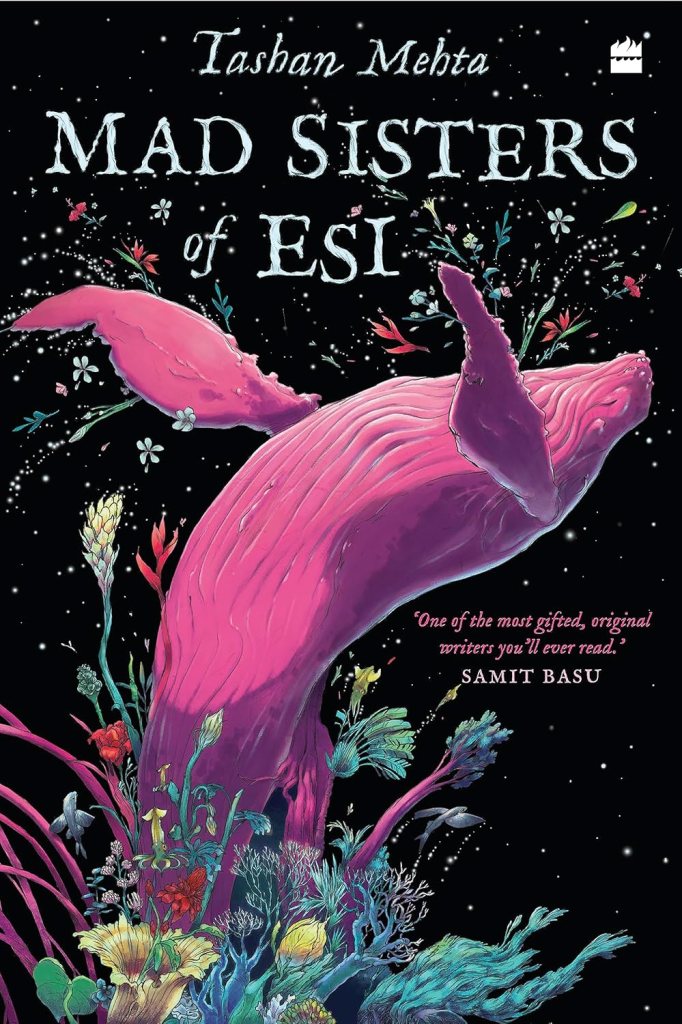
Mad Sisters of Esi (2023)by Tashan Mehta
The Prophecy: Sands of Time (2022) by Payal Dhar
Savage Blue (2016) by Vikram Balgopal
The Simoqin Prophecies (2004) by Samit Basu
Sons of Darkness (2022) by Gourav Mohanty
About the Author


Shreya Prasad is a PhD scholar at the Centre for English Studies, Jawaharlal Nehru University, New Delhi. She is currently investigating the unique world-building strategies employed by Indian writers of fantasy to create distinctly Indian spaces within the genre of fantasy. She can be reached at @shreyapd01 on Twitter and @a_corner_of_my_own on Instagram.